

Introduction: The Big Jump
Let’s be real for a second. I remember sitting in my very first FSc (Faculty of Science) Physics lecture. The professor walked in, picked up a piece of chalk, and started drawing vectors and deriving equations at what felt like light speed. I looked down at my Matric notes, which suddenly seemed incredibly simple, and then back at the board. A cold sweat broke out. I thought, “Oh boy, I am not in Kansas anymore.”
If you are reading this, you are likely standing at that same terrifying but exciting cliff edge. You’ve ace’d your Matriculation exams (congratulations!), and now you’ve stepped into the big leagues: FSc Pre-Medical or Pre-Engineering.
In Pakistan, FSc isn’t just another two years of school; it’s the pressure cooker that determines your future. It’s the gateway to King Edward, Aga Khan, NUST, or UET. The stakes are incredibly high, and the jump in syllabus difficulty from Grade 10 to Grade 11 is massive.
But here is the good news: It is entirely conquerable. I survived it, and thousands before me have too. I didn’t have a superpower; I just had a plan.
This article is that plan. It is the roadmap I wish someone had handed me on day one. I’m going to walk you through this two-year journey, from the initial culture shock of Part-I to the final exam hall strategies of Part-II, including how to juggle that terrifying entry test monster.
Grab a notebook, take a deep breath, and let’s dive in.

Phase 1: The Culture Shock (Welcome to Part-I)
The biggest mistake students make in the first three months of FSc Part-I is denial. They try to use the same study methods that worked in Matric.
In Matric, you could memorize ten questions and be 90% sure five of them would appear in the exam. In FSc, that “Ratta” (rote memorization) system will fail you miserably. The concepts are deeper, the numericals are trickier, and the examiners want to see if you actually understand the topic, not just if you can vomit out definitions.
The Fundamental Shifts
You need to change your mindset immediately. Here is a breakdown of the differences:
| Feature | Matriculation (SSC) | FSc (HSSC) |
| Syllabus Volume | Manageable. Limited chapters. | Massive. A single chapter can be 30+ pages dense with concepts. |
| Learning Style | Rote memorization often works. | Conceptual understanding is mandatory. |
| Teacher Role | Spoon-feeding. Teachers dictate notes. | Guides. You must take your own notes and study independently. |
| Time Limit | You have plenty of time to cover topics. | Time flies. The semester ends before you realize it started. |
My Advice: Accept that you know very little. Be humble enough to ask “stupid” questions in class. The faster you accept that the old ways won’t work, the faster you can adopt new ones.
Key Takeaway 1: Stop relying solely on “ratta.” Shift your focus from memorizing lines to understanding the why and how behind every concept.
Phase 2: Building the Strategy (The Daily Grind)
Success in FSc isn’t about pulling all-nighters a week before the exam; it’s about what you do on a random Tuesday afternoon in November. Consistency is boring, but it is the only magic pill.
Here is the strategy that worked for me:
1. The “Textbook is Bible” Rule
In Pakistan, board exams (Federal, Punjab, Sindh, KPK boards) are strictly based on the government-issued textbooks. Many students get distracted by expensive foreign authors or overly complicated academy notes.
While reference books are great for understanding difficult concepts, your primary source must be your board textbook. The examiners pick lines directly from these books for MCQs and short questions. Read every line, look at every diagram caption, and solve every example problem in the textbook first.
2. The Art of Note-Taking
Do not just copy what the teacher writes on the board. That’s transcription, not learning.
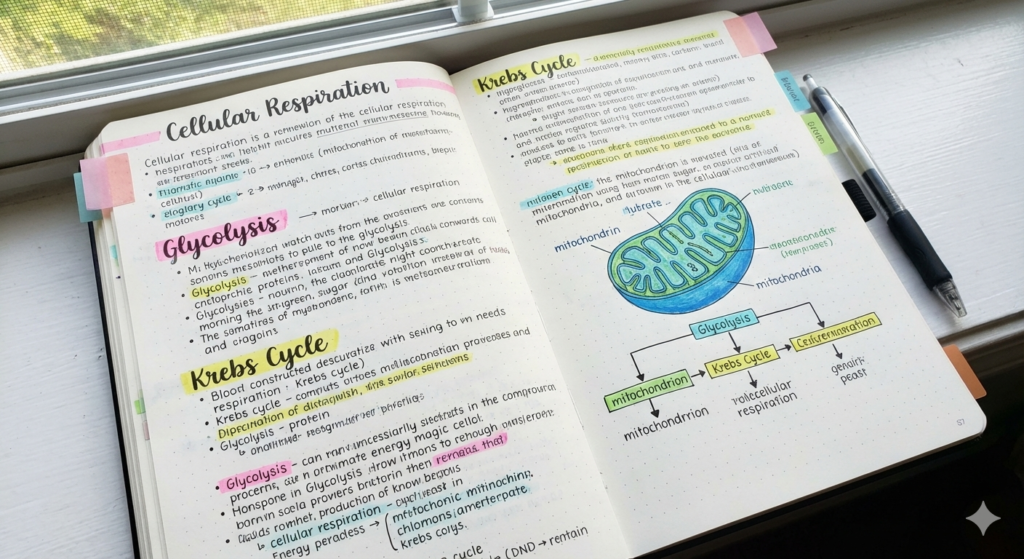
When taking notes in class, jot down keywords and rough diagrams. The real magic happens when you go home. Every evening, open your textbook and convert those rough class notes into fair, detailed notes in your own language.
- Use different colored pens for headings, formulas, and key definitions.
- Leave wide margins to add extra points later when revising.
- If a concept is hard, write an analogy that makes sense to you.
3. Subject-Specific Warfare Tactics
Every subject requires a different approach. You cannot study Biology the same way you study Math.
- Biology (The Visual Game): FSc Biology is intense. It’s not just memorizing names of bones. You need to understand complex physiological processes.
- Draw everything. Don’t just look at the diagram of the human heart; draw it ten times until you can do it from memory. Label it clearly.
- Flowcharts are your best friend. Use them for processes like the Krebs cycle or photosynthesis.
- Physics (The Concept Crusher): This is where most students struggle.
- Never memorize a derivation without understanding the first step. Ask yourself, “Why did we apply this specific law here?”
- Numericals matter. Do not skip the end-of-chapter problems. They often appear unchanged in board exams.
- Chemistry (The Balancing Act):
- Organic Chemistry (Part-II focus): This requires daily practice. Write reaction mechanisms repeatedly. Understand the movement of electrons, don’t just memorize the product.
- Inorganic Chemistry: This requires a bit more memorization of trends in the periodic table. Use mnemonics (memory tricks) to remember groups and periods.
- Mathematics (The Practice Beast):
- There is no shortcut here. You have to solve questions until your hand hurts.
- Do not just solve the easy ones. Tackle the “star” questions at the end of exercises; those are the exam-standard ones.
Key Takeaway 2: Your textbook is your primary resource. Master it before moving to guides. Tailor your study technique to the specific demands of each subject.
Phase 3: Handling the Mid-Game Crisis (Burnout and Mental Health)
Around January of Part-I, and again in November of Part-II, you will hit a wall. You will feel exhausted, stupid, and ready to quit. Your academy tests might not be going well, and the syllabus will look insurmountable.
This is normal. We call it the “Mid-Session Slump.”
I remember crying over a Physics chapter on rotational motion because I just couldn’t visualize it. I felt like a failure.
Here is how to deal with it:
- Acknowledge the Stress: It’s okay to not be okay. FSc is hard. Don’t bottle up the pressure. Talk to your parents or friends who are in the same boat.
- The “Do Not Disturb” Sleep Rule: You cannot learn complex biology if your brain is running on four hours of sleep and three cups of tea. You need 7-8 hours of sleep. Period. Your brain consolidates memories while you sleep. No sleep = no retention.
- Scheduled Breaks are Mandatory: Studying for 10 hours straight is counterproductive. Use the Pomodoro Technique: Study focused for 50 minutes, then take a strict 10-minute break (walk away from the desk, no phone). Repeat.
- Disconnect to Reconnect: Once a week, take a half-day completely off. No books, no talk of exams. Go play cricket, watch a movie, bake something. Your brain needs a reset button.
Key Takeaway 3: Mental health is not a luxury; it’s a necessity for academic performance. Schedule your breaks just as rigorously as your study sessions.
Phase 4: The Level Up (Juggling Part-II and Entry Tests)
Welcome to FSc Part-II. The difficulty just turned up to ‘Expert Mode’.
Now, you aren’t just worrying about board exams; you have the looming shadow of MDCAT (Medical entry test) or ECAT/NET (Engineering entry tests). This is the most critical phase of your two-year journey.
The Great Balancing Act
Many students make a fatal error here: they either totally ignore entry test prep until after board exams (too late!), or they become obsessed with entry tests and neglect their Part-II board syllabus (disaster!).
You need an integrated approach.
The Golden Rule: The concepts for your board exams and your entry tests are the same. The difference is the format of testing (Subjective vs. Objective/Tricky MCQs).
Here is a sample weekly structure for a Part-II student:
| Day | Primary Focus (Board Prep) | Secondary Focus (Entry Test Prep) |
| Monday | College lectures + Physics (Part-II) revision & numericals. | 1 hour: Solve 30 tricky Physics MCQs related to today’s topic. |
| Tuesday | College lectures + Chemistry (Part-II Organic) written practice. | 1 hour: Chemistry MCQs focusing on reaction mechanisms. |
| Wednesday | College lectures + Biology/Maths (Part-II) deep study. | 1 hour: Biology/Maths conceptual MCQs. |
| Thursday | Catch up on weak areas from Mon-Wed. | 1 hour: Reviewing Part-I concepts (pick one chapter a week). |
| Friday | Full focus on upcoming weekly college tests. | None. Focus on boards. |
| Saturday | Academy/Test Session Day. Full-length board pattern tests. | Evening: Analyze mistakes made in academy tests. |
| Sunday | Revision Day. Review the whole week’s work. | Afternoon: A full-length mock entry test practice (3 hours). |
Note: This is intense. Adjust it to your reality. But notice how entry test prep is sprinkled in daily, not saved for the end.
When studying a topic for the board exam (e.g., Organic Chemistry reactions), deeply understand the mechanism. Once you do, immediately solve 20 high-level MCQs on that topic. This hits two birds with one stone.
Key Takeaway 4: Do not compartmentalize board prep and entry test prep. Integrate them. Use MCQs to test the depth of your board exam concepts.
Phase 5: The Final Countdown (Revision and Exam Hall Tactics)
It’s March. The exams are a month away. The syllabus is huge. Panic is setting in.
Stop. Breathe. It’s time for strategic revision.
The Power of Past Papers
If you do nothing else in the last two months, solve the last 10 years of past papers for your specific board.
In Pakistan, board examiners love repeating patterns. Questions often get recycled or slightly modified. By solving past papers, you learn:
- The exact phrasing examiners use.
- Which topics are “favorites” and appear every year.
- Time management.
Don’t just read past papers; set a timer and solve them as if you are in the exam hall.
The Exam Hall Strategy
You have studied for two years. Now you have three hours to prove it. Here is how to maximize marks on game day:
- The First 15 Minutes: When you get the question paper, read it calmly. Don’t jump to the first question. Identify the questions you know 100% and mark them to attempt first.
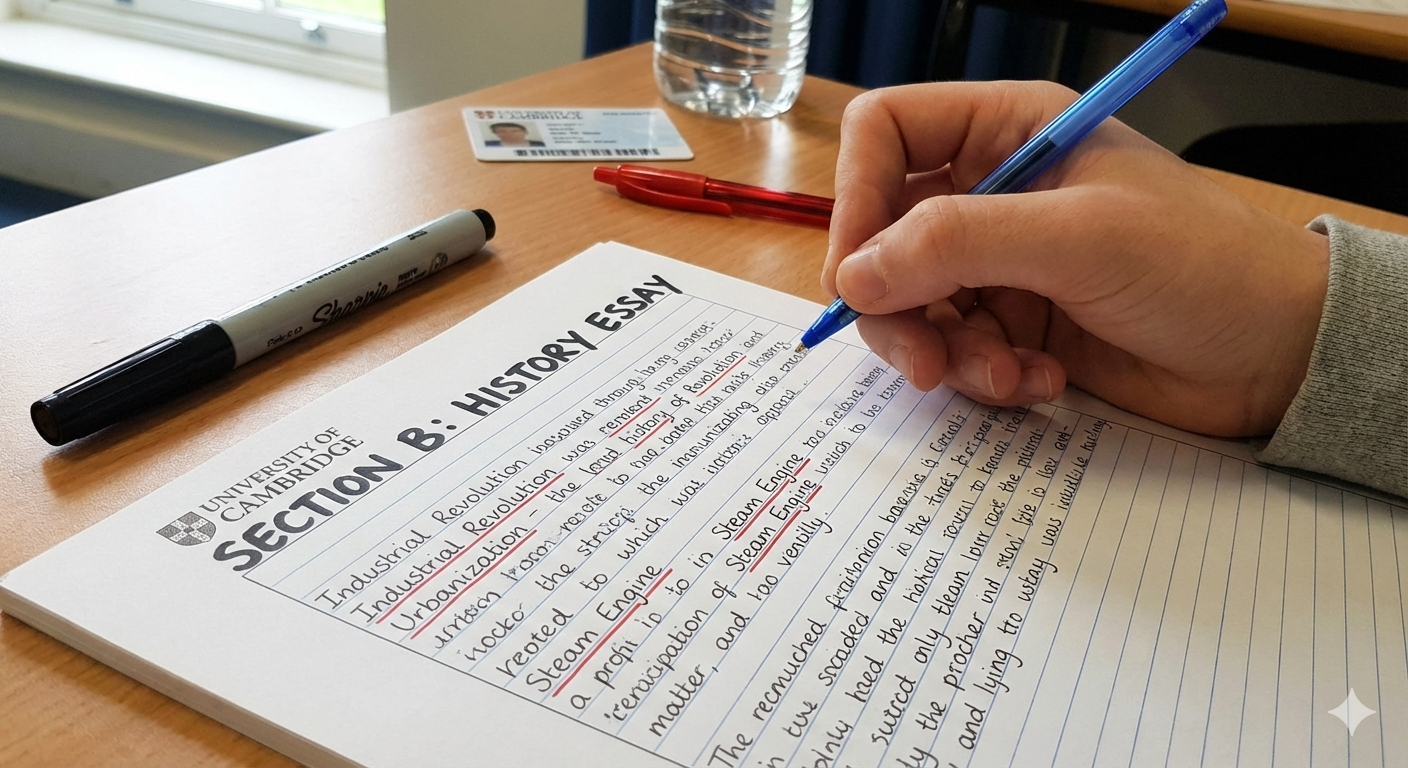
- Presentation Matters (Crucial for PK Boards): This is a sad reality, but presentation counts hugely in Pakistani board exams. The examiner checks hundreds of papers. Make yours easy to read.
- Use clear, bold headings with a black marker.
- Underline keywords in your answers.
- Draw a finishing line after every answer.
- Bold your final answers in numericals.
- Time Management: Allocate time based on marks. Don’t spend 45 minutes on a short question worth 2 marks. If you get stuck on a numerical, leave space and move on. Come back to it later.
- Attempting MCQs: Never leave an MCQ blank. If you don’t know the answer, use the process of elimination to narrow down choices and take your best guess.
Key Takeaway 5: Past papers are your best revision tool. In the exam hall, presentation and strict time management can boost your score significantly.
Conclusion: The Finish Line
Writing this roadmap brought back a lot of memories—the late nights, the endless cups of tea, the anxiety, and the eventual triumphs.
FSc is a marathon, not a sprint. There will be days when you feel defeated. There will be test results that make you want to cry. But remember why you started. Remember that white coat you want to wear or that engineering marvel you want to build.
Trust the process. Trust your hard work. If you remain consistent, protect your mental health, and study smart rather than just hard, you won’t just survive FSc—you will crush it.
Go get that dream. I’m rooting for you.